 Ben Franklin
|
19 Apr 2026
Ben Franklin
|
19 Apr 2026
What is a hackathon?
A hackathon (also known as a "ship-it day") is an event where a group of people get together and work on something collectively in a rapid manner of a short period of time. The idea is to work on something outside of the normal day-to-day tasks, and to have some level of prototype at the end of the period.
The end goal is not a fully finished product, it is to promote team colloboration and to begin working on an idea that can be made shippable later.
The details:
Date:
Friday 17th April 2026
Location:
Quba HQ (Cubo, Sheffield)
Duration:
4 hours
Sustenance:
Lots
Attendees:
Martha Goulding
Jake Platford
Rachel Parker
Thomas Walsh
Becky Willis
Ben Franklin
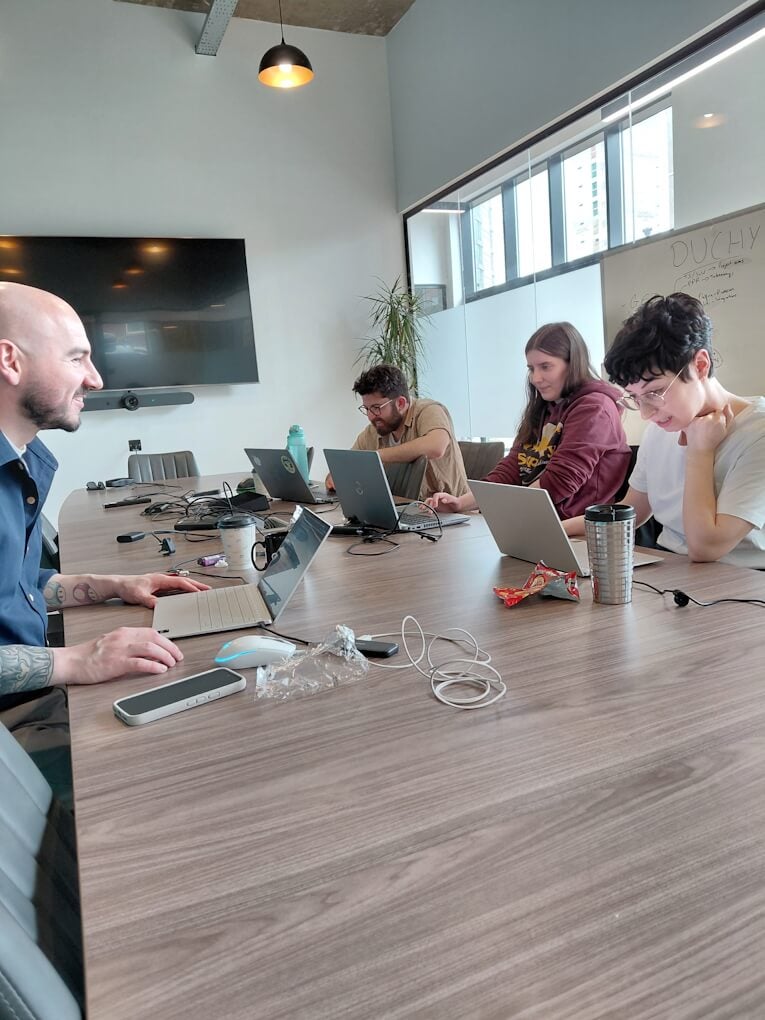
The challenge:
"Once a project is complete, we should be able to automate creation of all case study assets with as single click".
At Quba we are great at building stuff, but not so good at shouting about it. For example, the "Our Work" page on the website is always a step behind reality with projects not being added until months later. This is not down to anyone being slack, but it is about having the necessary resource available. We always focus on our customers first, so updating our own marketing collateral takes a back seat.
The good news is we already have much of the data required to create marketing assets, just not the time. Therefore the brief for this hackathon was to create an automation that would take these assets and spit out documents that would simply requiring vetting, thereby reducing the launch time of marketing massively.
For the hackathon there was no stipulation on which technology should be used - anything could be used as long as it was secure.
The data sources were set as:
- SharePoint
- Teams
- DevOps
- Client feedback surveys
- The project itself (e.g a website)
The output was set as one or more of the following:
- Long case study
- Short case study
- Social posts (e.g. LinkedIn)
- Teams notification
The process:
The team was given the choice of splitting into groups and building separately, or working together on a single output. They decided to work on one outcome, but broke into sub groups to tackle parts of the task. Namely, one group worked on indexing content within the Quba tenant, and one worked on scraping external assets.
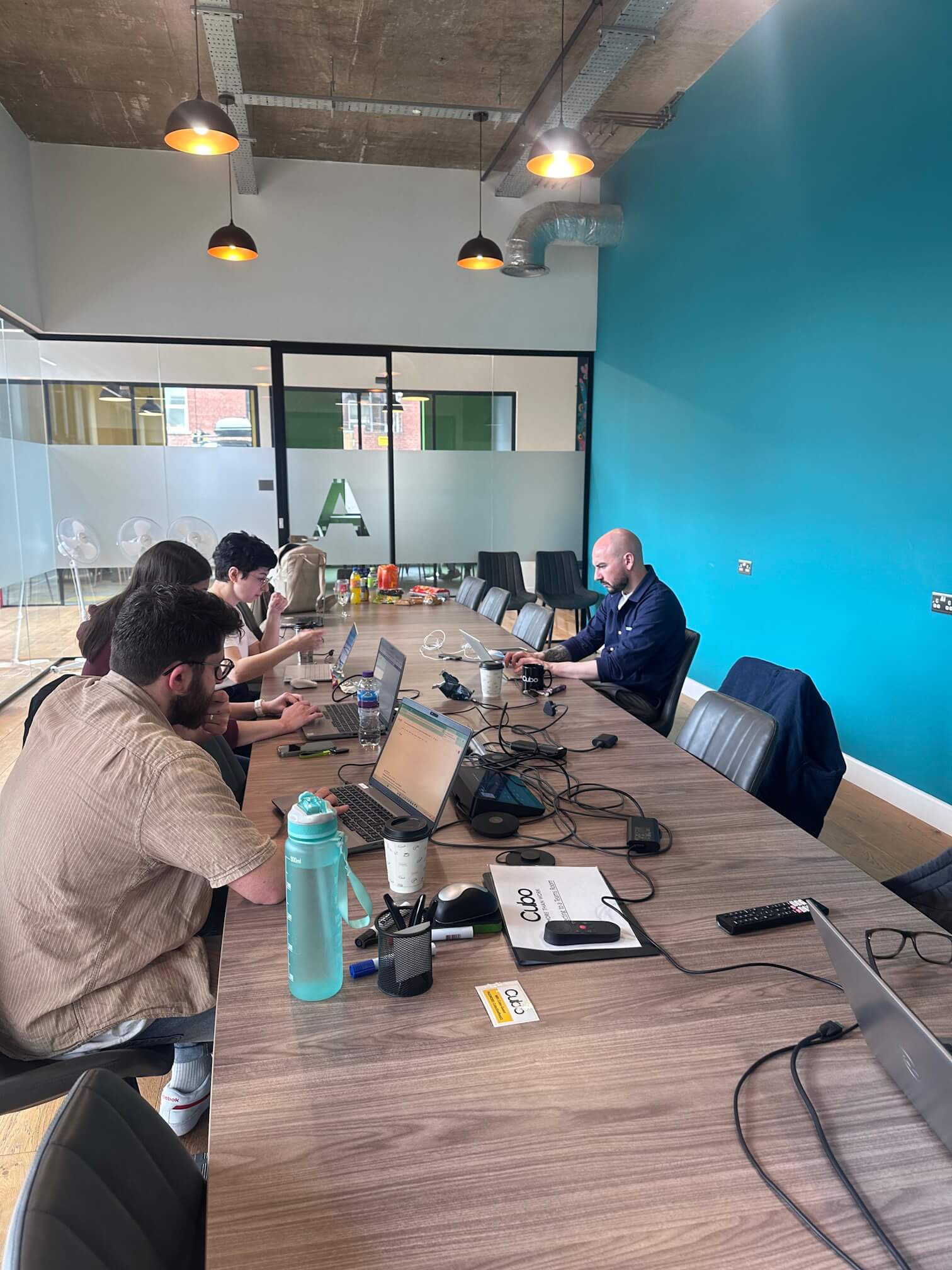
What became clear early on was that the time available (4 hours) would not be enough to complete all of the task. For context, larger scaled hackathons can run for 24-48 hours, which is harder to do in a smaller business! However, it was still enough time to get to a solid sign off point at the end of the session.
The result:
One half of the team leveraged Azure Logic Apps and OpenAI to index SharePoint content, and provide a "getter" to surface the content.
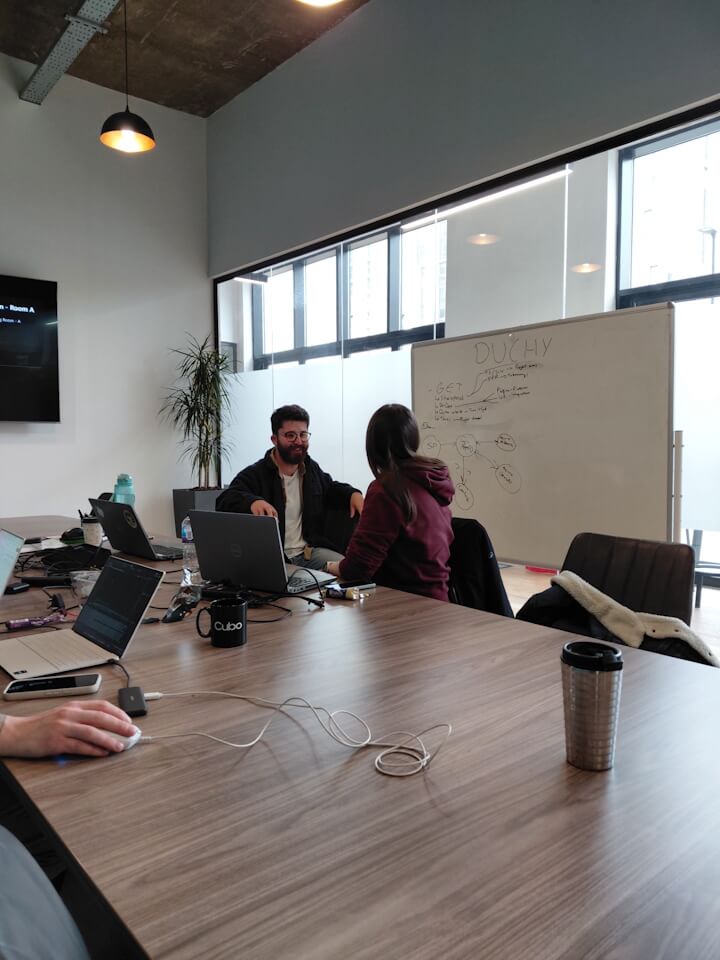
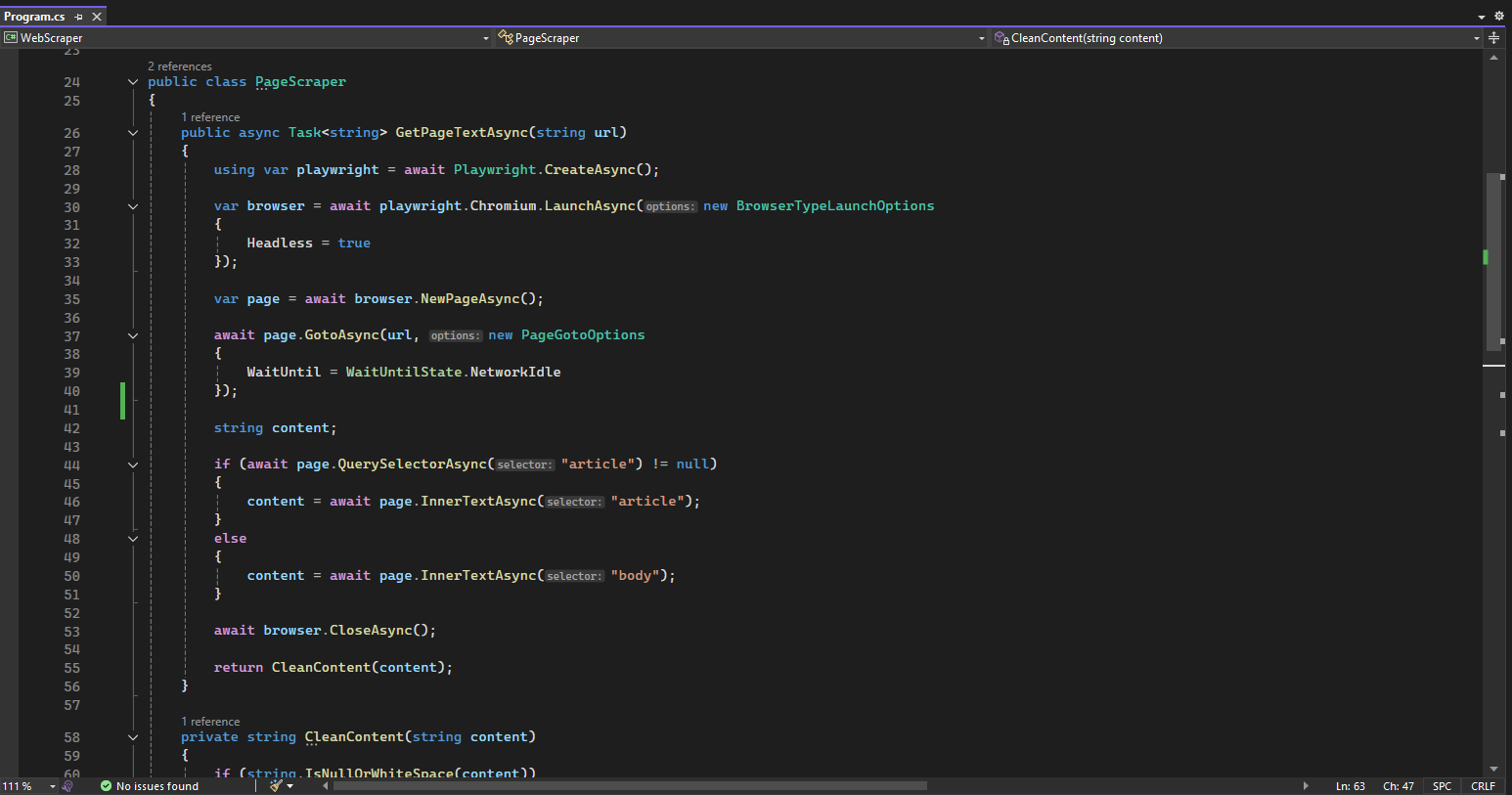
The other half of the team used Playwright to scrape frontend websites to extract the data and turn it into usable content for marketing assets.
Conclusion:
As time ran out, the whole team discussed what would be required to finish off the project and turn it into a usable internal tool:
- Join the data sources from both teams together
- Utilise an LLM on top of the data
- Create an automation to spit out the required assets
If you have an idea for a hackathon, or would like to get involved, take a look at our inQubator project and get in touch.
Get more of this by subscribing to our regular newsletter