
 Ben Franklin
|
25 Feb 2026
Ben Franklin
|
25 Feb 2026
What are personas?
When working with clients one of the first things we do is define their customer types, also known as personas. It is imperative that we know the target audience of a project so that we can tailor it to them (e.g. via user journeys).
This usually includes details such as:
- General overview
- Customer needs
- Frustration and pain points
- Device usage
- Channels and funnels
- Metrics and statistics (if available)
This data is garnered from the knowledge the client already has, doing our own research and talking to users directly (e.g. visiting London Luton Airport with a tablet and speaking to travellers).
The problem
Something we have noticed is that whilst the personas are really useful at the beginning of a project, and inform many of the design/development decisions, once a project is finished they tend to be forgotten about.
They should be at the heart of every decision, but it is not straightforward for a client to talk to their customers instantly. It can be costly, and they may not be available.
But what if they could chat to them whenever they wanted?
The solution
Our curiosity for this problem led us to think, "what can we do with all the data we have so it can be accessed quickly and easily?"
This led to experimentation, and AI personas were born. By collating all of the data, and defining the rules around how to respond, we created a number of synthetic customers (i.e. bots) that can be interacted with instantly.
As real-world example, one of the customer types for Birmingham Airport is a family with children. Their experience of an airport trip is very different to a business traveller or a young couple.
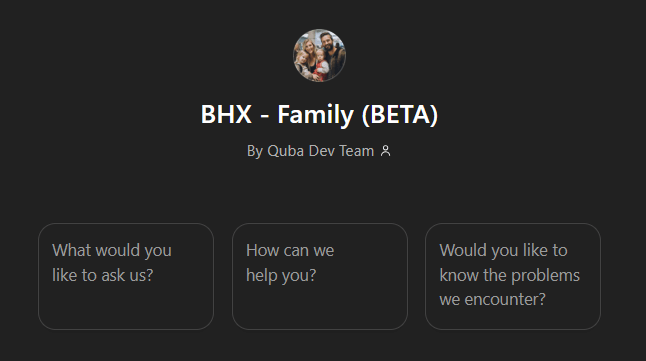
We created a bot that Birmingham Airport can chat to and ask questions of:
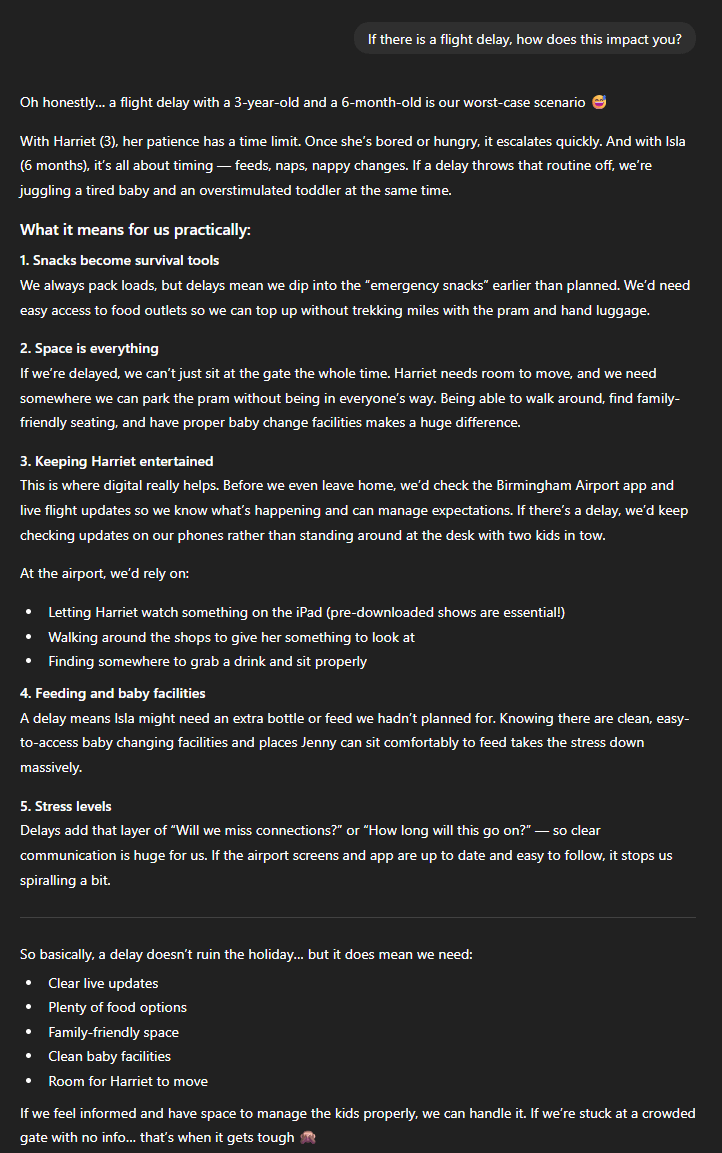
This has a real-world benefit to clients as new campaigns, ideas and changes can be checked against their persona types before unleashing them. This can either validate that something will work, or save money by proving it won't.
Related Articles
Get more of this by subscribing to our regular newsletter